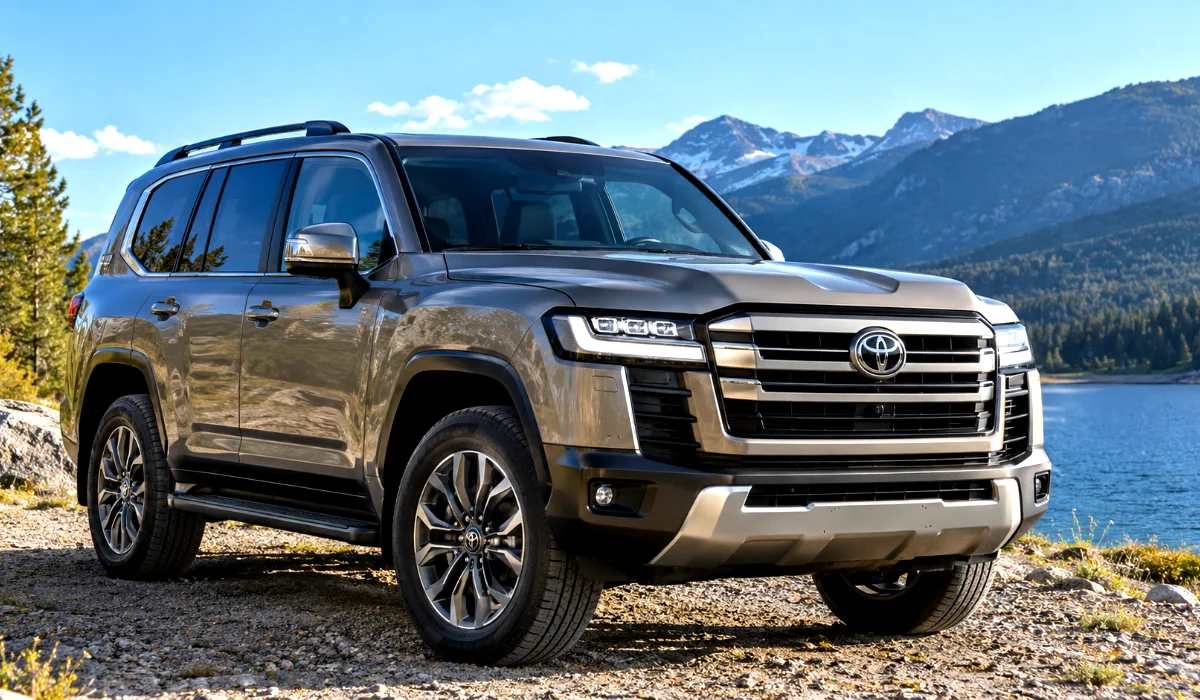
Toyota Land Cruiser fuel leak recall affects approximately 106,000 vehicles in the United States, according to Toyota’s October 14 safety notice. The company says certain model-year 2024–2027 Land Cruiser hybrids may have a fuel-tube connection near the tank that can disconnect. If that happens, fuel could leak until the hybrid system’s engine shuts down, and fuel near an ignition source can increase fire risk.
The recall is a practical safety issue, but it is important to read its scope accurately. It does not apply automatically to every Land Cruiser worldwide, and a model year alone does not tell an owner whether a particular vehicle is included. Toyota advises owners to check their vehicle identification number through the manufacturer’s recall page or the National Highway Traffic Safety Administration database.
Toyota’s planned remedy is to inspect the connection and install an additional clamp. If needed, dealers will replace the resin fuel tube and install the clamp. The repair is to be completed at no cost to the owner. Toyota’s notice said affected owners would be notified by mid-December 2026.
What is the reported fault?
The potential problem is at a fuel-tube connection near the fuel tank. Toyota says the connection could become disconnected, allowing fuel to escape. The company states that leakage can continue until the engine in the hybrid system shuts off. A leak alone does not mean a vehicle will catch fire, but gasoline in the presence of an ignition source creates a fire hazard.
The Canadian recall notice describes a similar issue on certain vehicles: a plastic fuel tube on top of the tank could disconnect from the main metal fuel tube, leading to fuel leakage and a possible fire risk. Transport Canada published its recall record on October 19 and directs owners to dealer inspection and installation of a clamp, with replacement if necessary.
These notices describe a manufacturing or connection risk, not evidence that every affected vehicle has experienced a failure. That distinction should not reduce the urgency of checking. Recall repairs exist to address a potential defect before an incident occurs.
What owners should do
Owners should check the VIN rather than rely on a headline, registration year or online forum post. The VIN is generally found on the driver-side dashboard near the windshield and on registration documents. Use Toyota’s official recall lookup or the relevant national regulator’s database. If a result shows an open recall, contact an authorised dealer and ask about parts and appointment availability.
If the vehicle is included, follow any interim instructions provided by Toyota or the regulator. If an owner notices a strong fuel smell, visible fuel leakage or other warning signs, they should stop driving in a safe location and contact roadside assistance or a dealer. Do not attempt to inspect or repair fuel-system components at home.
Toyota’s U.S. release says the dealer inspection and repair will be free. Owners should confirm whether the repair has already been completed on a used vehicle by checking the VIN and asking for service records. A seller’s verbal assurance is not a substitute for recall-status verification.
Core Elements of Detailed Mechanical Specifications
This is a safety recall for a fuel-system connection on certain hybrid SUVs, not a new Land Cruiser specification announcement.
| Recall detail | Confirmed information |
|---|---|
| Vehicle | Certain Toyota Land Cruiser hybrid SUVs |
| Model years listed in the US notice | 2024–2027 |
| US population | Approximately 106,000 vehicles |
| Potential condition | Fuel tube connection near the tank may disconnect |
| Possible consequence | Fuel leak; fire risk if fuel meets an ignition source |
| Planned remedy | Inspect connection; install supplemental clamp; replace tube if necessary |
| Repair cost | No cost to owner under Toyota’s recall remedy |
| Owner notification | Toyota said notices were planned by mid-December 2026 |
The scope and remedy can differ by country. Check the regulator notice for the vehicle’s country and VIN.
Hybrid system context
Toyota describes the Land Cruiser in the U.S. as a hybrid model, but the recall’s identified component is a fuel tube connection, not the high-voltage battery or electric motor. Readers should not infer that the issue is an electric-drive defect. The notice says leakage could continue until the hybrid system’s engine shuts off, which explains why the hybrid powertrain is mentioned in the safety description.
The recall also illustrates why hybrid vehicles still require conventional fuel-system maintenance and safety checks. Electrification changes how propulsion works, but a hybrid that carries gasoline still has a tank, lines, connectors and an internal-combustion engine. Owners should treat a fuel smell or visible leak seriously regardless of the vehicle’s electrification level.
How to interpret the model-year range
The years in a recall headline describe the population Toyota is investigating, not a guarantee that every vehicle built or sold during those years is affected. Production dates, trim configuration, region and vehicle identification number determine whether a specific unit is included. Even two vehicles of the same model year may have different recall status.
Imported vehicles make this especially important. A Land Cruiser sold in one country may have a different specification or campaign identifier from a vehicle sold elsewhere. Owners should use the safety authority responsible for the country where the vehicle is registered, and provide the complete VIN if contacting a dealer. A U.S. recall notice is not a substitute for a local-market recall record.
Used-car shoppers should make the recall check part of the normal inspection process alongside service history, accident repairs, tyre condition and diagnostic scans. If an open campaign appears, ask the seller whether the dealer can complete the repair before handover. If the repair has already been performed, retain the work order with the vehicle documents.
Why prompt repairs matter
Some owners delay recall work because the vehicle appears to drive normally. That is understandable when the car has shown no warning, but a potential fuel connection issue may not be visible during an ordinary walk-around. Recall campaigns are designed to correct a risk before it becomes an everyday symptom.
The dealer’s inspection is also the right setting for a fuel-system repair. Fuel lines operate under conditions that require proper tools and procedures. Attempting a clamp installation outside the authorised repair process could create a new leak or complicate the campaign record. Owners should follow the manufacturer’s instructions and keep proof of completion.
If a warning sign appears before a scheduled repair, the owner should not wait for a routine service appointment. Fuel odour or visible liquid beneath a vehicle should be treated as a possible leak. Move away from traffic safely, avoid ignition sources and ask for professional assistance.
CarBikeInsight Analysis
For owners, the most useful fact is the simple one: check the VIN. A recall population of around 106,000 is large enough to warrant attention, but it does not mean all Land Cruisers from those years are included. VIN checking prevents both unnecessary alarm and missed repairs.
Toyota’s remedy is also relatively clear: dealer inspection, a supplemental clamp and tube replacement if needed. The brand says the repair is free. The remaining practical question for an owner is timing, so contacting a dealer early is sensible if the vehicle is confirmed in the campaign.
For used-car buyers, an open recall should be part of the pre-purchase check. Ask the seller for the VIN, verify the campaign status and request documentation if the repair has already been completed. A popular SUV’s reputation does not remove the need to verify specific safety campaigns.
This story was announced earlier in the week and remains timely because owners still need to act. No recall should be described as a global campaign unless the relevant authority confirms that scope in each market.
SOURCE: [Toyota US recall notice]
-
Toyota Land Cruiser fuel-leak recall: how owners can check their SUV
Toyota Land Cruiser fuel leak recall affects approximately 106,000 vehicles in the United States, according to Toyota’s October 14 safety notice. The company says certain model-year 2024–2027 Land Cruiser hybrids may have a fuel-tube connection near the tank that can disconnect. If that happens, fuel could leak until the hybrid system’s engine shuts down, and…