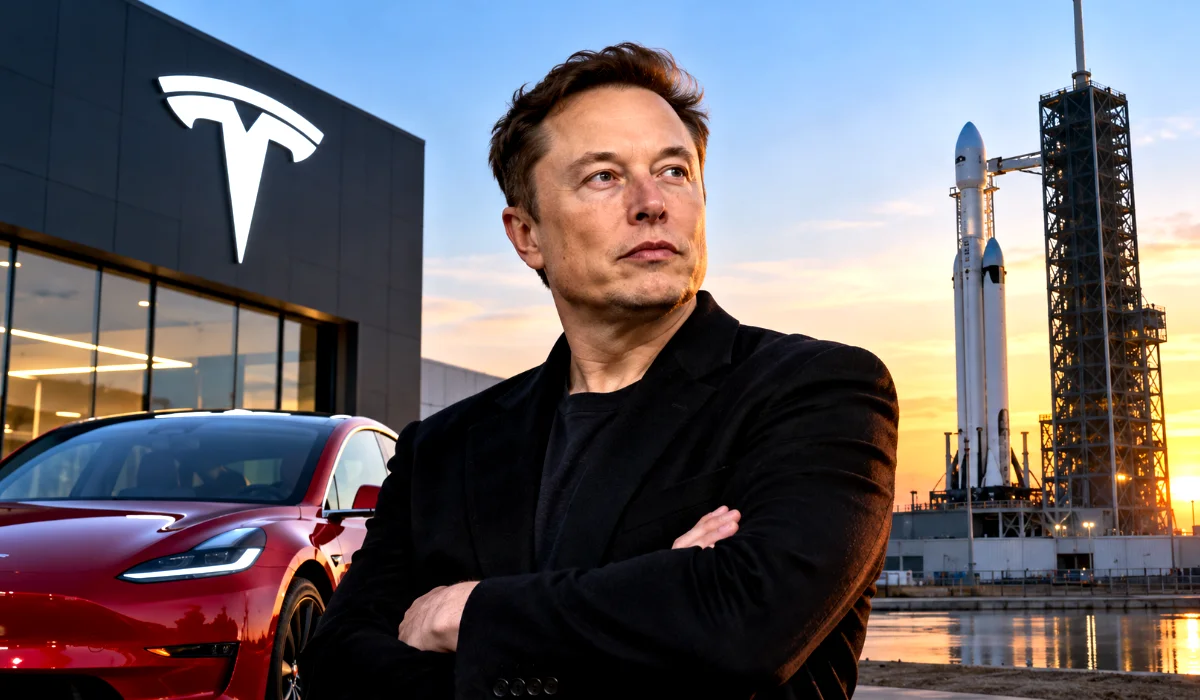
The SpaceX Tesla merger is now being discussed by special committees at both companies, but no agreement has been reached and a deal is not certain. Elon Musk voiced support for combining the businesses during SpaceX’s third-quarter earnings call on October 20, calling it a good idea. He also cautioned investors against treating a merger as inevitable. The committees, made up of independent directors, were formed at shareholders’ request and are responsible for examining the possibility. Reuters reported that Musk said he could not take part in their discussions because he has a conflict.
That distinction matters. This is not yet a merger announcement, a signed agreement or a confirmed plan to combine the companies. It is an early review of a possible transaction between an electric vehicle maker and a space, satellite and computing company. For Tesla owners, employees and investors, the practical questions are still unanswered: what would each business be worth, who would control the combined company, and would the deal change Tesla’s priorities?
SpaceX Tesla merger: what has actually been confirmed
The public information so far comes from Musk’s comments on the earnings call, as reported by Reuters, the Associated Press and other news outlets. The companies have formed special committees of independent directors to explore a merger. Musk said the committees had not agreed on transaction terms and may never do so. If they do reach a proposal, shareholders would still need to consider it. The Associated Press also reported Musk’s warning that describing a merger as certain would overstate the situation.
No exchange ratio, purchase price, timeline or final corporate structure has been disclosed. It is also too early to say which company would acquire the other. Reuters reported that SpaceX acquiring Tesla was one possibility being discussed, citing an unnamed person familiar with the matter, but that is not a confirmed transaction plan.
Musk’s role adds another layer. He leads both businesses and has substantial ownership and voting influence across them. That creates potential conflicts when one company considers buying, merging with or exchanging assets with the other. Independent committees are intended to assess the proposal separately from Musk’s interests. Their independence, access to financial advice and ability to negotiate terms will be central to whether investors view the process as credible.
Why combine an automaker with a space company?
The strategic case is based on overlap in areas that have grown beyond the companies’ original identities. Tesla is known for electric vehicles, batteries and energy storage, but it is also investing in autonomy, robotics and artificial intelligence. SpaceX operates rockets and Starlink, and its newer business interests include AI computing infrastructure. The companies have already announced Terafab, a chip manufacturing project linked to their computing and AI ambitions.
Musk said a combination could help with AI software, chip design, robotics, connectivity and moving computing capacity into orbit. Some of those ideas have a plausible connection. Tesla’s battery and energy-storage experience could be relevant to power-hungry data centres. Starlink connectivity could eventually support connected vehicles or other mobile systems. Tesla’s large-scale manufacturing capabilities and SpaceX’s work on launch systems may also create areas for cooperation.
Those are potential synergies, not demonstrated merger benefits. A shared owner or a partnership can allow companies to collaborate without putting them under one corporate roof. The committees would need to decide whether the benefits of combining are greater than the costs, complexity and loss of focus that could come with a much larger organisation.
SpaceX’s earnings add context to the timing
The merger discussion came during an unusually strong quarter for SpaceX. The company reported revenue of $14.58 billion for the three months ended September 30, up 161 percent from a year earlier, and net income of $4.4 billion, according to Reuters. The Associated Press reported that SpaceX moved from a year-ago loss to a quarterly profit.
Artificial intelligence contributed to the changing business mix. Reuters reported that SpaceX’s AI revenue rose to $7.56 billion, largely from renting data-centre capacity to other developers. The Associated Press said AI became the company’s largest business by revenue in the quarter, while Starlink remained its biggest profit generator. This helps explain why a merger discussion is being framed around computing, chips and connectivity as well as rockets and cars.
The growth carries significant costs. Reuters reported that SpaceX spent $19.6 billion on capital expenditure in the third quarter and expected to spend $35 billion to $40 billion in the fourth quarter. Building data centres and computing capacity at that scale requires substantial investment. A combined organisation could theoretically coordinate capital across businesses, but it could also expose Tesla shareholders to spending decisions tied to projects far removed from vehicle production.
The valuation and governance questions
Reuters described the combined companies as potentially worth around $3.5 trillion based on their respective market valuations at the time of reporting. That is an estimate of a hypothetical combination, not a negotiated valuation or an agreed price. Any actual deal would require a method for valuing both businesses, deciding how ownership should be divided and accounting for their different financial outlooks.
The fairness of that exchange would be difficult to assess. Tesla shareholders would be asked to value a business with vehicle, energy and autonomy operations alongside SpaceX’s launch, satellite and computing businesses. SpaceX investors would be taking on exposure to Tesla’s automotive competition, manufacturing costs and demand cycles. Investors in both companies could disagree over whether the other side’s growth prospects are being valued too generously.
Control is another major issue. A merger could change Musk’s voting power, depending on the transaction structure and the share classes involved. That makes the committees’ work especially important. They must consider whether the proposed terms serve the interests of each company’s shareholders, rather than simply advancing a broader vision of combining Musk-led businesses.
Regulatory review would also be expected. SpaceX’s work with government and national-security customers, combined with Tesla’s manufacturing and commercial ties in China, could draw scrutiny from regulators in multiple jurisdictions. That does not mean regulators would block a transaction, but it would add time, disclosure requirements and uncertainty.
Core Elements of Detailed Mechanical Specifications
This is a corporate transaction story, not a new Tesla vehicle announcement. No changes to Tesla models or vehicle hardware have been disclosed as part of the merger discussions.
| Vehicle or product detail | Status in the merger discussion |
|---|---|
| New Tesla model or launch date | None announced |
| Battery, motor or drivetrain changes | None announced |
| Range, charging or performance figures | None announced |
| Vehicle pricing or availability | No changes confirmed |
| SpaceX hardware added to Tesla vehicles | Not announced |
Any claim that the merger will produce a specific car, battery system or vehicle capability would be speculation unless the companies announce it.
What the talks could mean for Tesla customers
For now, Tesla’s current vehicle range and ownership experience remain separate from the merger review. There has been no announcement of a change to vehicle production, pricing, warranties, service operations or product plans. A committee reviewing a corporate combination does not automatically mean those areas will change.
If a merger were eventually approved, customers might see closer ties between Tesla’s vehicles, energy products and satellite connectivity. But the nature of any such integration would depend on the final agreement and later product decisions. Starlink connectivity in Tesla vehicles, shared battery systems for data centres or new joint products have not been confirmed as merger outcomes.
Tesla buyers should therefore judge current vehicles on their published specifications, pricing and service support, rather than on possible benefits of a corporate transaction that may not happen. The same caution applies to predictions that SpaceX’s rockets or Starlink will directly improve an existing Tesla model.
CarBike Insight Analysis
The SpaceX Tesla merger talks are significant because they move a long-running idea into a formal review by independent director committees. The timing also reflects how both businesses are expanding into AI, computing and infrastructure. SpaceX’s recent revenue growth gives the discussion a stronger financial backdrop, while its large capital spending shows why a merger could bring both opportunity and risk.
The decisive questions are not whether the companies can imagine working together. They already have areas of overlap. The harder test is whether a specific deal would give shareholders fair value, maintain clear accountability and make the combined businesses stronger than they would be separately. Until the committees publish terms and shareholders have a proposal to evaluate, the merger remains a possibility under review, not a settled corporate future.
-
SpaceX and Tesla Merger Talks: What the Special Committees Must Decide
The SpaceX Tesla merger is now being discussed by special committees at both companies, but no agreement has been reached and a deal is not certain. Elon Musk voiced support for combining the businesses during SpaceX’s third-quarter earnings call on October 20, calling it a good idea. He also cautioned investors against treating a merger…