Chery L4 Robotaxi: Chery’s L4 robotaxi is set for a global demonstration at the company’s October 19–23 International User Summit in Wuhu, China, alongside a planned cooperation agreement with UAE-based K2. The vehicle is described as purpose-built for Level 4 driverless operations from the factory, rather than a regular car fitted with autonomous-driving hardware later. The announcement sets out an ambition; it does not confirm an approved or operating robotaxi service.
The company’s demonstration plan covers more than a vehicle driving itself. Passengers are meant to book through an app; cloud dispatch sends a car to the pickup point; riders can adjust the cabin temperature before arrival; and the app can unlock the doors and open the boot. Chery says the vehicle is designed for a daily fleet cycle that includes repositioning, energy replenishment, cleaning and inspection. These are company-stated capabilities planned for an on-site demonstration, not proof that a commercial service is already operating.
Chery L4 robotaxi: what “purpose-built” means
Most production cars are designed around a human driver. Their steering wheel, pedals, controls, mirrors and cabin layout all assume a person is actively operating the vehicle. A purpose-built robotaxi can reconsider that arrangement from the start: where passengers sit, how doors open, how the vehicle is cleaned, how remote support works and how the fleet is charged between trips.
Chery says its robotaxi follows five native design principles covering architecture, factory integration, passenger experience, operations and global adaptability. That language signals a systems approach, but it does not reveal the vehicle’s platform, sensor suite, computing hardware, battery size, range, charging time or capacity. Those are important details for an operator deciding whether a fleet can run reliably and economically.
Under SAE J3016, Level 4 means automated driving under defined conditions without requiring a human to intervene to manage risk. It does not mean the vehicle can operate autonomously everywhere, in every weather condition or on every road. A service needs a carefully defined operational design domain: approved streets, mapped areas, speed limits, weather conditions and responses to unusual road events. Chery’s global adaptability claim will need to be demonstrated separately in each market.
The passenger journey is only one part of the service
The demonstration is designed to show a complete ride without a driver, from app request to arrival. A controlled area cannot represent every trip: a real service must handle blocked kerbs, roadworks, emergency vehicles, pedestrians, bad weather and passengers who need help.
Chery says the robotaxi can use cloud dispatch and perform self-service cleaning and inspections. A fleet still needs reliable support when a passenger leaves an item, a sensor fails or a vehicle stops in the wrong place. The announcement does not provide staffing levels or remote-assistance procedures.
An app can make boarding easier, but accessibility must be considered too. Passengers may have mobility needs, be travelling with children or luggage, or lack reliable mobile connectivity. A successful robotaxi service needs clear instructions, accessible vehicle entry, emergency contact options and a way to reach human support. These are not minor design details; they shape whether people trust the service enough to use it more than once.
Safety claims need evidence on roads, not just a feature list
Chery describes a six-part safety framework that includes cabin protection, multi-modal sensing, algorithm training and decision-making, redundant execution systems, cloud safety monitoring and fleet management. The company says its perception approach combines tactile, visual, acoustic and wave-based sensing, and that its execution system has six-fold redundancy. Those are manufacturer descriptions. The announcement does not provide independent test results, sensor specifications, failure-rate data or an operational safety case.
Redundancy is important because autonomous systems must respond safely when a sensor, computer or communication link fails. But counting redundant elements is not enough to establish safety. The system needs to detect a fault, move to a safe state, communicate with passengers and avoid creating a new hazard. A cloud connection can support monitoring, yet the vehicle must still handle a loss of network coverage without relying on a remote operator to steer it through every difficult moment.
Testing must cover routine trips and difficult scenarios. A predictable route in clear weather does not demonstrate readiness for citywide service. Authorities will want evidence on roadworks, hand signals, cyclists and emergency scenes. Chery says validation considers local laws, climate and networks, but has not disclosed routes or protocols.
K2 partnership: a first step, not proof of overseas deployment
Chery says it plans to sign a strategic cooperation agreement with K2, a UAE-based company, during the summit. It describes this as an initial step toward international commercial deployment. A partnership announcement is meaningful, but it is not the same as an approved operating licence, a signed fleet purchase, a named city launch or a service start date.
To operate abroad, the project will need local regulators, vehicle certification, insurance, data-protection compliance, mapping, emergency response and an accountable service operator. Rules can vary substantially between markets. A vehicle that is technically capable of driverless operation may still need a safety driver during testing or may be restricted to a small geofenced area. Chery’s statement that the vehicle is designed for local adaptation acknowledges this challenge but does not resolve it.
The economics are another test. Factory integration may avoid retrofit costs, but autonomy adds sensors, computing, cleaning, remote operations and maintenance. Chery has not published a vehicle price, fleet size or cost-per-kilometre estimate to support its competitiveness claim.
Core Elements of Detailed Mechanical Specifications
The October announcement focuses on the robotaxi system and passenger journey, not a conventional vehicle specification sheet.
| Specification | Chery / OMODA & JAECOO L4 robotaxi information available |
|---|---|
| Vehicle type | Purpose-built, factory-integrated L4 robotaxi, according to Chery |
| Automation | L4 intended for driverless operations within a defined operational domain; exact domain not announced |
| Booking / dispatch | App-based ride request and cloud-based dispatch in the planned demonstration |
| Passenger controls | Remote cabin temperature setting, app-based door unlock and boot opening described by Chery |
| Daily fleet functions | Repositioning, energy replenishment, self-service cleaning and inspections described by Chery |
| Sensor types / count | Not disclosed in the October announcement |
| Computing hardware | Not disclosed |
| Battery capacity / range | Not disclosed |
| Charging rate / time | Not disclosed |
| Seating capacity / dimensions | Not disclosed |
| Commercial deployment | Planned K2 cooperation; no city launch date or approval confirmed |
The specifications are intentionally limited to details in the company’s announcement. A full mechanical and autonomous-driving datasheet has not been published in the source reviewed. Chery via GlobeNewswire
CarBike Insight Analysis
Chery’s robotaxi announcement matters because it treats driverless mobility as a vehicle-and-operations problem, not merely a software feature. The app, dispatch system, cleaning cycle, inspection process and passenger interface all have to work together if a fleet is to operate without a driver.
The next proof point is not a striking demonstration. It is a transparent description of where the vehicle can operate, how it responds when systems fail, what independent testing has shown and which regulator has approved it. The L4 label does not mean universal autonomy, and the planned K2 cooperation does not yet confirm a commercial service outside China.
For passengers, convenience will matter, but trust will decide adoption. People need to know how to get help, what happens when a journey stops unexpectedly and how the vehicle protects their data. For operators, uptime, cleaning, charging and liability will determine whether the business works. Chery has outlined the ambition; the summit demonstration is an early step. Deployment, safety evidence and transparent operating rules will decide whether the robotaxi can move from showcase to service.
-
Chery L4 Robotaxi: Global Test, Safety Questions and UAE Plans
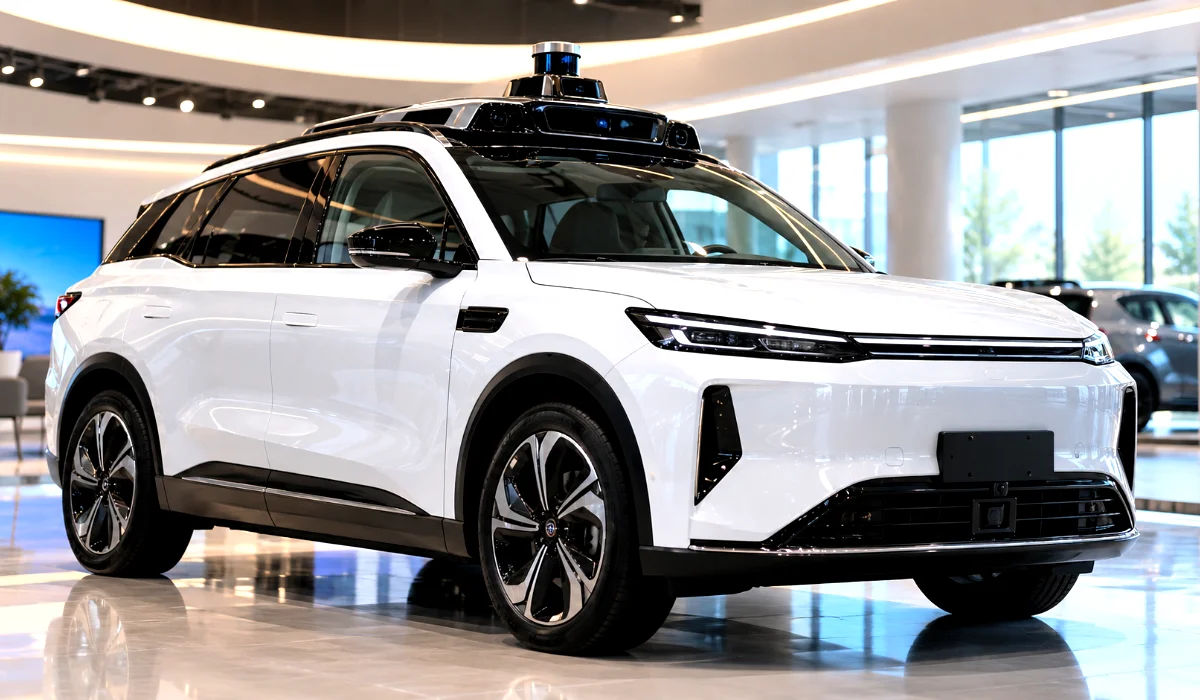
Chery L4 Robotaxi: Chery’s L4 robotaxi is set for a global demonstration at the company’s October 19–23 International User Summit in Wuhu, China, alongside a planned cooperation agreement with UAE-based K2. The vehicle is described as purpose-built for Level 4 driverless operations from the factory, rather than a regular car fitted with autonomous-driving hardware later.…