Renault E-Space Concept is easy to mistake for a preview of a new family car. It has six proper seats, a flat floor, a glass-heavy cabin and the proportions of a large people mover. But Renault is careful about the label: this is a concept exploring the future of its “voitures à vivre” philosophy, not a direct preview of a production model and not a replacement for today’s Espace.
That distinction makes the E-Space more interesting, not less. At the Paris Motor Show, which runs through October 18, Renault has put a big question in front of a global audience: after years of family buyers being steered toward SUVs, is there room again for a vehicle designed around the people inside it? The concept’s answer is visual and tactile rather than numerical. Renault has shown its dimensions, cabin ideas and some technology, but has not announced battery capacity, motor output, range, charging speed or a production date. Those gaps matter. For now, the E-Space is a design argument, not a car you can order.
Renault E-Space Concept revisits the MPV for electric families
The original Renault Espace arrived in 1984 with a one-box shape and a cabin that treated passengers as the main event. Renault says the new concept revisits those founding principles for the electric era: a generous interior, modular seating, natural light and technology intended to serve family life. The company calls it a contemporary successor in spirit, while explicitly saying it is not intended to preview a production vehicle directly.
The timing gives the idea a wider relevance. The Paris show has put electrification, software-defined vehicles and global competition on its agenda. Meanwhile, the E-Space proposes something less familiar than another high-riding electric crossover: a low-waisted, long-roofed people carrier. It does not prove buyers are ready to return to MPVs, but it offers a different way to use electric-vehicle packaging.
Renault’s own dimensions put the concept at 4.70 metres long, 2.02 metres wide and 1.67 metres high. Its 23-inch wheels sit near the corners, while short overhangs and a relatively low stance help it avoid the visual bulk associated with many SUVs. Renault describes the windscreen as an extension of the bonnet, drawing on the streamlined profile of the first Espace. A movable front splitter is shown as an aerodynamic feature, but the company has not published a drag coefficient or efficiency result.
Renault E-Space Concept design: a bright cabin before a bold body
Renault says its designers began with the interior, then shaped the body around that living space. The result is a glazed cabin, low beltline and large glass roof. A production vehicle would have to balance that openness with climate control, structural strength, crash protection, cost and glass weight.
The rear-hinged doors open without a central pillar, creating a wide entrance. It is a striking demonstration, but Renault has not said whether this arrangement could reach a road car; safety requirements and everyday parking would shape any production solution.
Inside, six individual seats sit across three rows on a flat floor. The middle seats turn through 180 degrees to face the rear row; in a four-seat layout, they fold down to form a table. Renault also shows folding trays, rear screens and a sliding console with a small fridge and air purifier.
The useful idea goes beyond the show-car theatre: families do not use every seat the same way on every trip. A cabin that shifts between carrying six and making room for conversation could be more valuable than one that simply adds another screen. Renault has not said how much luggage space remains in each layout or published a boot-capacity figure.
Renault E-Space Concept technology: the screen is not the whole story
The OpenR Panorama display stretches across the cabin and measures 1,130 by 110 millimetres. It is not touch-sensitive; controls sit on two smaller swivelling screens around the steering column. Renault says the display will reach future upper-range models, starting with the next-generation Scenic and Rafale. That is a firmer production signal for the screen than for the E-Space itself.
The concept also uses steer-by-wire, with no conventional mechanical link between steering wheel and road wheels. Renault has not supplied hardware details, redundancy information or a production timeline for this application, so it remains a technology demonstration rather than a showroom promise.
Renault lists dyed-straw trim, a wool floor covering, interior paint using 18 per cent bio-based resin, and steering-wheel material containing castor oil and organic cotton. These are selected concept materials; the company has not published the vehicle’s total renewable-material share or lifecycle emissions, so they do not yet support a broader sustainability claim.
Core Elements of Detailed Mechanical Specifications
Renault has disclosed the concept’s dimensions and selected design technologies, but it has not published a complete mechanical specification. The omissions below are important for readers comparing it with production EVs.
| Specification | Renault E-Space Concept information available on 18 October 2026 |
|---|---|
| Vehicle type | Fully electric MPV concept |
| Length | 4,700 mm |
| Width | 2,020 mm |
| Height | 1,670 mm |
| Seating | Six individual seats across three rows |
| Floor | Flat cabin floor, as presented by Renault |
| Wheels | 23-inch concept wheels |
| Battery capacity | Not announced |
| Motor layout and output | Not announced |
| Drive configuration | Not announced |
| WLTP or other range | Not announced |
| DC charging rate or time | Not announced |
| Production status | Design and technology concept; not a direct production preview |
Without battery, motor and charging data, it is not possible to make a meaningful range or performance comparison with electric SUVs or MPVs. The concept’s packaging hints at an underfloor battery, but Renault has not supplied a pack size, cell chemistry, platform name or usable capacity. Nor has it said whether a future production vehicle would keep the same six-seat layout. Treating any online estimate of those figures as confirmed would go beyond the published information.
What the Renault E-Space Concept could mean for family mobility
The concept’s strongest case is space used differently. An MPV can prioritise access and passenger room, while an EV’s flat floor may help cabin packaging. That does not automatically make it more efficient or spacious than an SUV; the result depends on the platform, battery placement, crash structure and final dimensions.
The Espace name brings history, but the concept has to work beyond a motor-show stand. Its big wheels, open-pillar doors and extensive glazing may change when cost, durability, repairability and regulations enter the picture.
The question is relevant well beyond France: families everywhere weigh passenger capacity, child-seat access, luggage space, running costs and parking. A six-seat electric people mover could appeal if it combines a manageable footprint with easy access and useful range. Renault has announced no price, market plan or launch date, however, and has not committed to selling this vehicle at all.
Renault E-Space Concept launch, price and production status
Renault unveiled the E-Space Concept at the 2026 Paris Motor Show, running October 12–18 at Paris Expo Porte de Versailles. No price, booking date, production schedule or market availability has been announced. The current Renault Espace remains a separate model.
Headlines calling this a “new electric Espace” need a qualification. The name refers to the 1984 original, but Renault describes a laboratory for exploring design, space and people-centred technology. The OpenR Panorama display is planned for future Renault models; that does not mean the complete E-Space will reach production.
CarBike Insight Analysis
The Renault E-Space Concept challenges the assumption that every family EV must be an SUV. Its six-seat cabin and swivelling middle row put passengers first, while its electric concept format lets Renault explore a flatter floor and a flexible interior.
The clearest production clue is the OpenR Panorama display, planned for future Scenic and Rafale models. The E-Space has no announced battery, motor, range, price or launch plan; Renault says it is not a direct production preview.
For the idea to matter, a real vehicle would need an adaptable cabin, robust and affordable hardware, and range and charging suited to family journeys. Until those details appear, E-Space is an invitation to reconsider the MPV, not proof that an electric family van is returning to showrooms.
-
Mahindra Q2 FY27 Results: Profit Up 25% as SUV Volumes Jump 26%
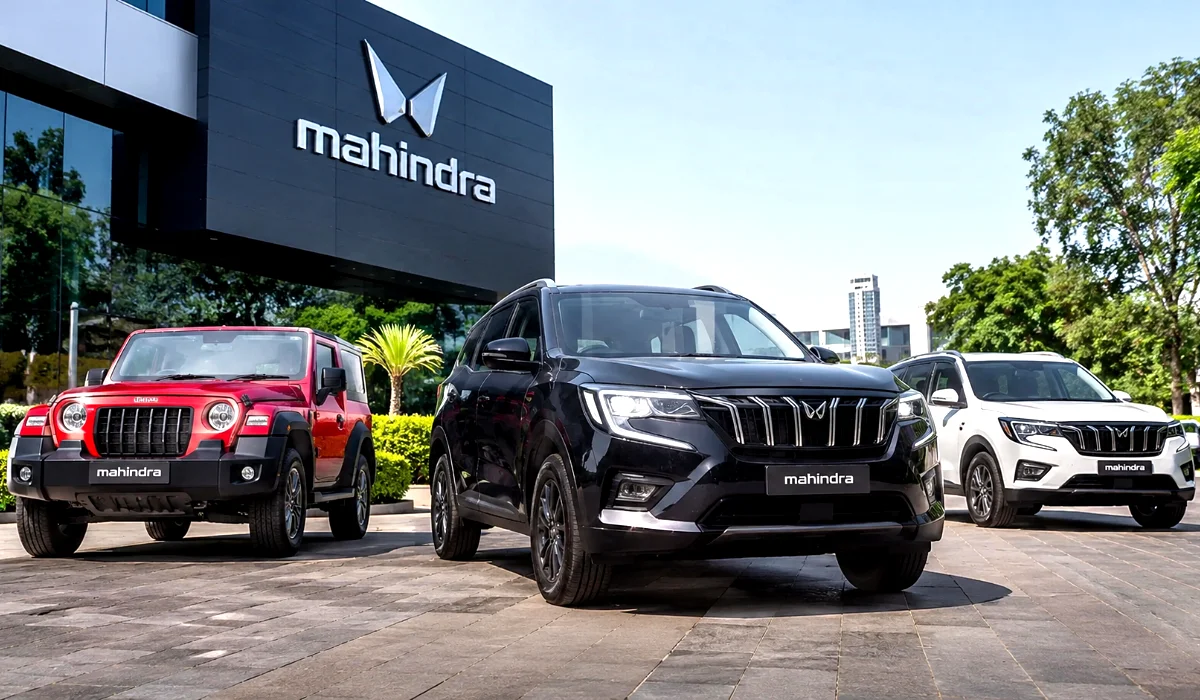
The Mahindra Q2 FY27 results, announced on Thursday, November 5, 2026, show SUVs doing the heavy lifting. Mahindra & Mahindra’s consolidated profit attributable to owners rose 25% year-on-year to ₹4,588 crore for the July-September quarter, up from ₹3,673 crore. Revenue from operations also grew 25%, to ₹57,553 crore from ₹46,106 crore. The automobile business was…
-
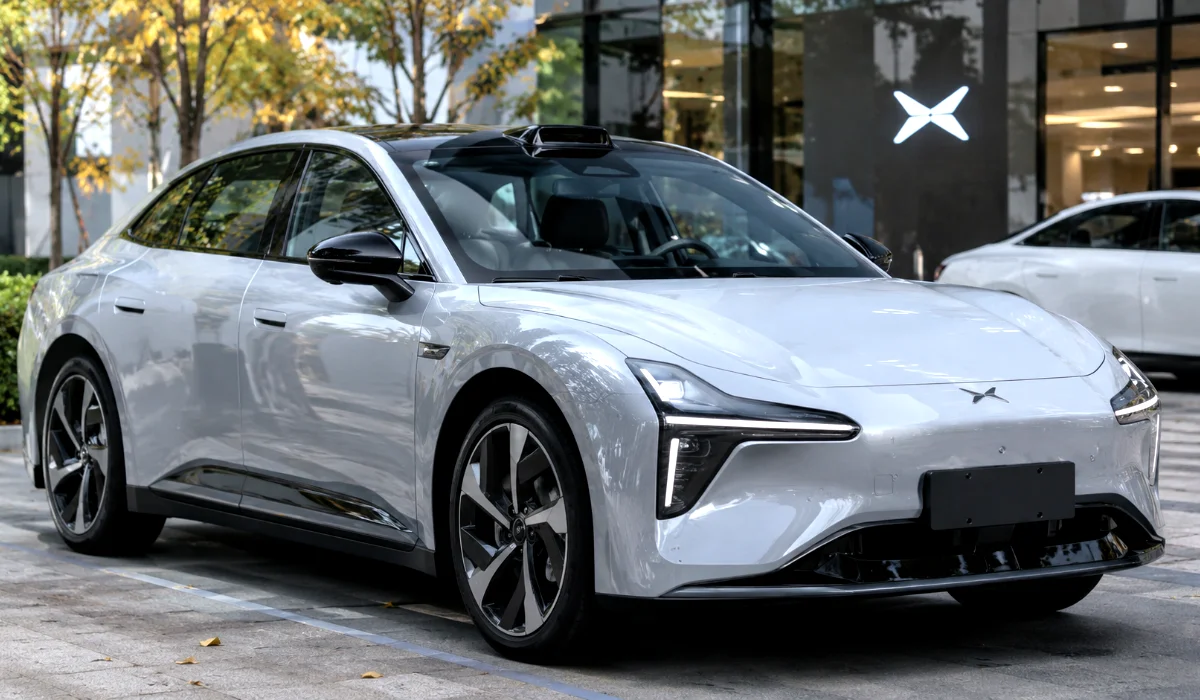
Xpeng Mona L05: Deliveries Start With a 10,000-Unit Month Target
The Xpeng Mona L05 is Xpeng’s new mid-size Mona-series SUV, and China owner deliveries have now begun. CnEVPost reported on November 5, 2026 that a first-owners ceremony took place on November 4, with chairman and CEO He Xiaopeng saying the company is targeting 10,000 Mona L05 units in the first month. The model went on…